.svg)

.svg)


.webp)

- Ignition Benefits is recommended for founders and teams of up to 200 employees who want to see their Benefits Risk Score and have an independent broker audit the full market to assess their options.
- Nava Benefits is recommended for mid-sized companies with an HR team that want AI-powered benefits administration, employee self-service tools, and 24/7 support to reduce HR workload.
- Aon and WTW are recommended for large and multinational employers that need enterprise-scale consulting, global benefits management, advanced analytics, and benefits administration across multiple regions.
Benefits are usually the second-largest expense after payroll, yet they’re often one of the least understood parts of a company’s cost structure. That gap is why many companies turn to benefits consulting firms.
In this article, we compare five top benefits consulting firms across their services, strengths, weaknesses and ideal customer profile, so you can narrow down the right fit for your business.
5 Top Benefits Consulting Firms in 2026: A Quick Overview
Not all employee benefits consulting firms solve the same problems. Some are built for startups, others for large enterprises, and their services vary just as much. Here's a quick snapshot of five leading firms and where each one fits best.
To find the right benefits consulting company for your business, start by answering four key questions. The video below walks you through each one to help you make the right choice.
1. Ignition Benefits: Best for Founders and Teams of up to 200 Employees
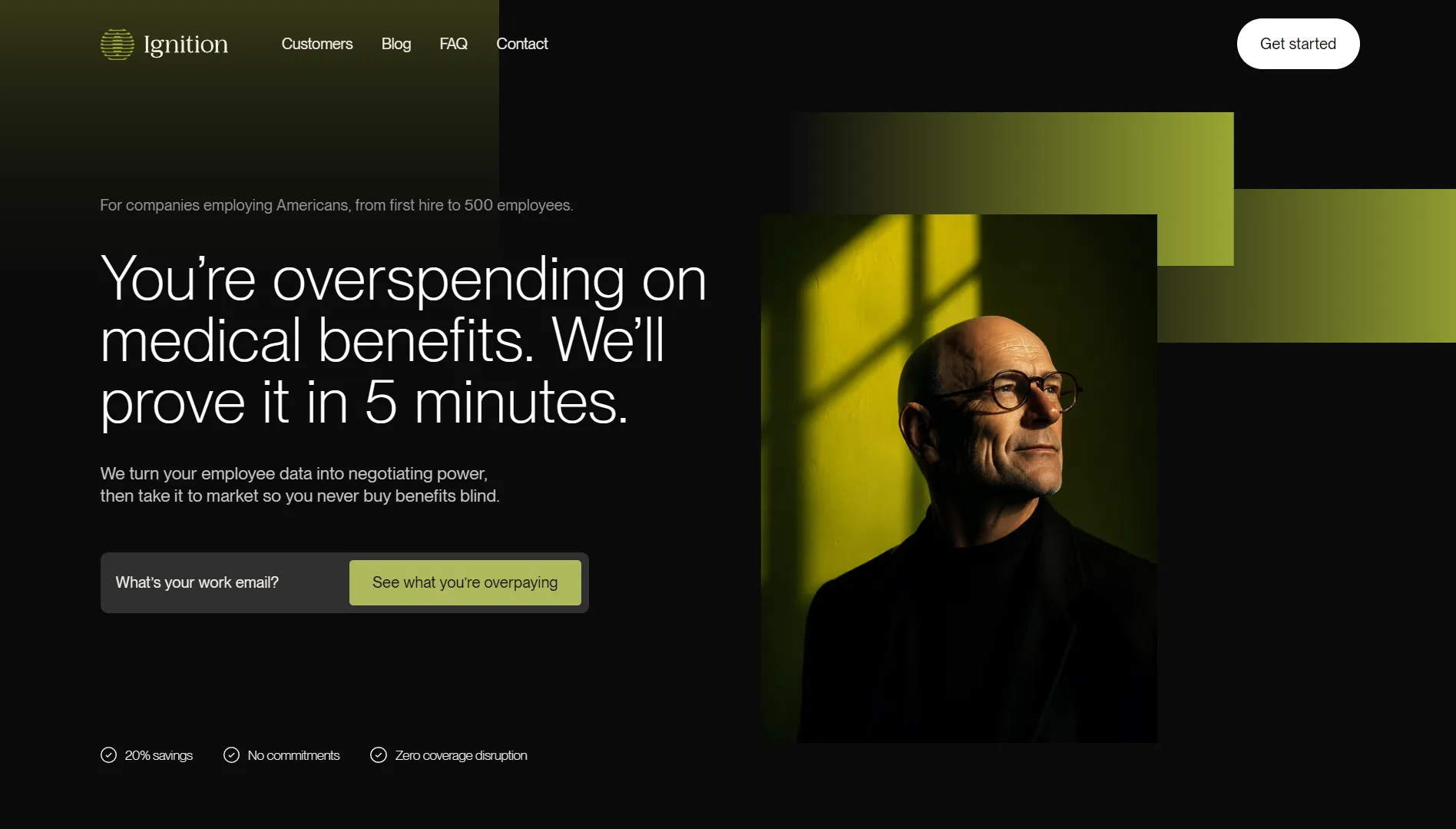
Ignition Benefits is an employee benefits brokerage built for founders who want more visibility into one of their biggest business expenses. At every renewal, it compares your plan against the wider market, evaluates different funding strategies, and provides the Benefits Risk Score based on the same factors carriers use to price your renewal.
Ignition Benefits Key Features
Ignition's service is built around three deliverables a founder without an HR team can act on quickly. Each one answers a single question: are you overpaying, by how much, and what should you do about it.
- Benefits Risk Score visibility: Carriers use risk models to estimate the cost of covering your workforce, but employers rarely get to see the information behind those decisions. Without that context, it can be difficult to understand why your premiums changed or whether your renewal reflects your team's actual risk.
Ignition shares your Benefits Risk Score before going to market, giving you insight into the same factors carriers use when pricing your plan. That extra visibility helps you understand your renewal, ask better questions, and negotiate with more confidence. - Full Market Audit: Ignition runs a full market audit at every renewal. It checks every available carrier and plan against your actual workforce data. The audit includes a funding review: whether you should stay fully insured, move to level-funded, or consider self-insurance.
- The Benefits Analysis Report: It shows how your current plan compares to every option on the market, lays out your workforce risk profile, and gives you a clear next step, all in plain language with no jargon. Most brokers take 8 to 12 weeks to produce a review at this depth. Ignition delivers it in 14 to 21 days.
Ignition Benefits Pricing
There is no direct fee to the employer for the brokerage service. Ignition is paid through carrier commissions that do not vary by which carrier you choose.
Where Ignition Benefits Shines
- Speed for lean teams: You provide a short census form and spend about 30 minutes across two 15-minute calls. Ignition then handles the rest and delivers a detailed benefits analysis report within 21 days.
- Zero carrier runaround: Ignition handles every carrier call, form, and follow-up for you. You choose the benefits plan, and Ignition takes care of everything needed to get it in place.
Where Ignition Benefits Falls Short
- US-focused: Ignition serves companies employing Americans. A business whose benefits problem is mostly outside the US will need a firm with broader multi-country reach.
Ignition Benefits Customer Reviews
Nick Mares from Light Labs shares, “I didn't realize how much money we were leaving on the table until Ignition ran the numbers. We saved $113,000 in year one, on a 25-person team. For a company our size, that makes a big difference.”
Robert McConchie from AWM Capital says, “We assumed Gusto was getting us a fair deal on benefits. Two short calls with Ignition saved us six figures and got us better coverage than we'd ever had.”
Who Ignition Benefits Is Best For
- Founders and operators at companies with up to 200 employees and no HR team: You own the benefits decision but need clearer visibility into your options, pricing, and whether your current plan is still competitive.
- Companies approaching 50 employees on a PEO: As your team grows, Ignition helps you evaluate whether staying with a PEO still makes sense or if moving to a different benefits structure could be a better fit.
- Venture-backed startups with young, healthy teams: Ignition helps lower-risk teams explore whether they have better options than their current fully insured plan.
2. Nava Benefits: Best for Mid-Sized Teams That Want a Tech-Heavy Brokerage

Nava Benefits describes itself as a modern employee benefits broker that pairs benefits advisors with AI-powered technology to cut admin, simplify renewals, and support employees around the clock. It is aimed at HR teams that want a technology layer on top of brokerage.
Key Features
- HQ, an AI benefits platform: Nava's HQ brings renewals, carrier bill audits, documents, and a personal AI assistant into one place. Nava states it gives HR teams back 40+ hours a month.
- A 24/7 employee experience: Employees get an AI and human support line, digital ID cards, provider search, plan decision support, and medical spending tracking through the Nava app.
- Alternative funding expertise: Nava works in self-funding, Pharmacy Benefits Manager (PBMs), and captives, and runs real-time renewal modeling for HR.
Pricing
Nava Benefits does not publish its pricing plans and models publicly. Contact their team to get a quote.
Where Nava Benefits Shines
- Administrative relief for HR: The platform automates carrier bill audits and document management, which is where Nava's published time savings come from.
- Strong security: Nava states that HQ is SOC 2 Type II certified and HIPAA compliant, which matters for a platform handling sensitive information, like employee health data.
Where Nava Benefits Falls Short
- Best with an HR team in place: Nava positions as an extension of HR, so a founder-led company without HR staff gets less from the platform.
- Less founder-native: The product centers on HR workflows and employee support rather than the founder’s growth-stage priorities.
Customer Reviews
Kaylyn R. shares, “I really appreciate how Nava Benefits takes a more personal approach to benefits management and strategy, helping us map out a wide range of options and highlighting the significant impacts from an employee standpoint.”
A G2 reviewer says, “Nava's app is the one area that could use some improvement. The app lacks compared to other brokers and health apps.”
Who Nava Benefits Is Best For
- HR leaders at mid-sized companies: Teams that want to cut benefits admin and give employees a modern support experience.
- Companies prioritizing the employee experience: Organizations that value 24/7 support and self-service tools alongside brokerage.
3. Aon: Best for Large and Global Enterprises
.webp)
Aon’s Consulting and Broking practice helps employers design, manage, and optimize their employee benefits programs. It combines market insights, data and analytics, and its own solutions to help companies manage risk, control costs, and create benefits programs that support employee needs.
Key Features
- Employee benefits broking: Aon designs, places, and manages benefits programs meant to attract talent and manage risk, using market insight, carrier access, and data-driven analysis to control cost and improve employee outcomes.
- Voluntary employee benefits: Aon builds voluntary benefit programs covering health, financial wellbeing, and personal protection to offset out-of-pocket costs and fill coverage gaps.
- Pharmacy benefit consulting: Aon advises employers, health systems, and plans on improving pharmacy benefit management decisions and outcomes.
- Health plan fiduciary services: Aon helps employers meet their ERISA duty to run health and welfare plans in employees' best interests. It reviews plan governance, vendor selection, and plan documents, runs compliance testing, and trains plan fiduciaries.
Pricing
Contact Aon’s team to learn about their pricing.
Where Aon Shines
- Global reach: Multi-country coverage that fits multinational employers.
- Voluntary benefits scale: Aon offers a broad range of voluntary benefits options, giving larger employers access to a wider product portfolio.
Where Aon Falls Short
- Built for scale: Aon’s Consulting and Broking practice is designed for large and multinational employers with complex benefits requirements. Smaller founder-led teams may find the level of support and infrastructure more than they need at their current stage.
Customer Reviews
Emmanuel M. shares, “For medium size companies the fees can be expensive and sometimes lead to redundant analysis.”
A G2 reviewer says, “Aon Hewitt Consulting has helped us with our open enrollment. When we are in lock down season, Aon assists us with how to get more customers into the system during the open enrollment time period.”
Who Aon Is Best For
- Large and multinational employers: Organizations that want one firm for benefits broking, compliance, and global, pharmacy, executive, and voluntary programs.
4. WTW: Best for Large Employers Wanting Consulting Plus Administration

WTW is a global advisory, broking, and solutions company with more than 140 years of benefits consulting and more than 40 years of benefits administration and technology experience as stated on its website.
Its health and benefits practice combines strategy, financing, administration, and pharmacy programs for large employers.
Key Features
- Strategy navigator: A five-pillar framework WTW uses to define and build an employee benefits program, covering financing, employee experience, and administration.
- Pharmacy Guardian: A set of pharmacy programs, including the Rx Collaborative and PBM Overlay, aimed at guiding plan sponsors and members to lower-cost options.
- Benefits administration and outsourcing: WTW runs benefits enrollment and day-to-day administration for employers through its own integrated platform and staffed service centers.
- Actionable Integrated Analytics (ACT): WTW's health and benefits analytics portal brings together the financial and clinical reporting on an employer's health plan and adds predictive analytics on future cost exposure, so plan sponsors can see how the plan is performing and where to adjust.
Pricing
Pricing is not public, contact WTW’s team to learn more.
Where WTW Shines
- Consulting plus operations in one place: Few firms combine strategy, administration, and pharmacy programs at WTW's scale.
- Data infrastructure: The ACT portal centralizes financial and clinical reporting for ongoing decisions and predicts large claims and future costs.
Where WTW Falls Short
- Enterprise orientation: The depth of administration and analytics is built for large plan sponsors, not lean teams.
Customer Reviews
A G2 reviewer shares, “Immersive experience across talent, benefits, culture and rewards by bringing employees to one place for all things HR with easy access to transactional partner and provider systems on demand.”
A Trustpilot reviewer says, “They make the process of moving a pension as difficult as possible. They will pretend this is for your safety however no other provider puts as much difficulty into the process.”
Who WTW Is Best For
- Large employers wanting one partner for strategy and administration: Organizations that want consulting, pharmacy programs, and benefits operations under one roof.
5. Mercer: Best for Mid-Size to Large Employers

Mercer provides global health and benefits consulting and brokerage services for mid-sized (500-5,000 employees) and large organizations (5,000+ employees).
It works with employers to design benefits programs based on their business goals, workforce needs, and risk profile, using a network of licensed local brokers to deliver support across different markets.
Key Features
- Benefits strategy and consulting: Mercer helps employers design and manage benefits programs, covering plan design, health risk management, financing, administration, vendor management, and governance.
- Benefits analytics: Employers can use Mercer’s analytics capabilities to understand claims trends, identify cost drivers, improve wellbeing programs, and support retention.
- Pharmacy cost management: Mercer helps employers manage rising prescription drug costs while maintaining access to the medications employees need.
- Global benefits management: For multinational employers, Mercer provides a single way to manage insured employee benefits across regions and countries.
Pricing
Contact Mercer’s team to get a personalized quote.
Where Mercer Shines
- Data-driven decisions: Mercer positions its analytics tools as market-leading, helping employers turn their own claims data into cost and wellbeing decisions.
- Wide range of benefits expertise: Mercer covers strategy, analytics, pharmacy, global, voluntary, and wellbeing programs, including multinational coverage.
Where Mercer Falls Short
- Not designed for smaller teams: Mercer primarily serves mid-sized and enterprise employers with more complex benefits needs. Smaller companies may find its range of services and global capabilities more than they need.
Customer Reviews
A G2 reviewer shares, “Mercer helped us with designing employee benefit plans for a mutual client. I liked that they were fast to respond, professional and the people I worked with were kind even when faced with issues that arose.”
Ganesh N. says, “Mercer being a big brand charges high costs which can be reduced.”
Who Mercer Is Best For
- Mid-to-large and large employers: Organizations that want established strategic consulting, clinical and pharmacy programs, and benchmarking data at scale.
Which Benefits Consulting Firm Helps With Benefits for a Team Spread Across 10+ States?
For US teams spread across multiple states, a modern broker like Ignition Benefits can be a strong fit. It runs a full-market audit based on your workforce data, compares available options, and manages carrier coordination throughout the process.
If your workforce spans multiple countries, global firms like Aon, WTW, and Mercer are better equipped to handle the complexity of multinational benefits programs. The right choice depends on where your employees are located and how complex your benefits needs are.
Reasons to Switch From a Traditional Broker to a Modern Benefits Consultant
Traditional brokers often rely on manual processes, limited carrier options, and unclear compensation structures. A modern benefits consultant takes a different approach by using data, technology, and greater transparency to give employers a clearer view of their options.
Here are two reasons growing companies are making the switch.
You Want To Know If Your Plan Is Actually Competitive
Many companies approach renewal by reviewing the options their current broker provides. Without comparing the wider market, it is difficult to know whether your plan is still competitive or whether another structure could better fit your team.
A modern consultant evaluates carriers, plans, and funding structures based on your workforce data. Ignition runs a full-market audit and compares available options side by side, helping companies identify potential savings and better-fit plans.
You Want A Simpler Way To Switch Brokers
Many founders delay changing brokers because they assume it will require a major time investment or create disruption in employee coverage. In reality, switching brokers is usually an administrative change, and coverage can continue without interruption.
Changing brokers takes a single document, the Broker of Record letter, which appoints Ignition as your broker with the carriers. Employees keep the same plans, so nothing changes on their end.
Stop Renewing Blind: Get Your Free Ignition Benefits Assessment
If you lead a growing company with up to 200 employees and still own the benefits decision, Ignition helps you understand whether your current plan is still the right fit. A free assessment gives you a clearer view of your options before you commit to another renewal.
Ignition reviews your current plan, analyzes your workforce risk, compares options across the market. You get the information needed to decide whether staying put or making a change makes sense.
Find out if you’re overpaying on benefits.
FAQs
What’s the Difference Between a Benefits Consultant and a Benefits Broker?
Not much in practice. A broker sources and manages your plans through carriers, and a consultant adds strategy, benchmarking, and analysis. Modern firms do both.
Do I Need a Benefits Consultant if I Have Fewer Than 50 Employees?
Yes. Smaller groups often have less negotiating leverage and may have a harder time knowing whether their benefits are priced competitively. An independent review can clarify available options and identify where the current plan may be falling short.
Can I Switch Benefits Consultants Mid-Year, or Do I Have to Wait for Renewal?
Yes, you can usually switch benefits consultants mid-year. Changing brokers is an administrative update handled through a Broker of Record letter, and your existing coverage stays in place. However, if you want to change your actual benefits plan, you typically need to wait until your renewal period or have a qualifying life event.
How Long Does a Typical Benefits Benchmarking Engagement Take?
It varies. A modern broker such as Ignition delivers an analysis in about 14 to 21 days, while large-firm consulting engagements can run up to 12 weeks..
What Credentials Should I Look for in a Benefits Consultant?
Look for state licensing, experience with your company size, and clear written disclosure of how the firm is paid.
Are Larger Consulting Firms Always More Expensive Than Boutique Ones?
No. Brokers are usually paid through carrier commissions already built into your premium, so the firm's size does not automatically change your cost. What changes cost is plan design and whether the firm runs a true market audit.


_%20Which%20One%20Wins%20for%20Your%20Team_.webp)
![How to Reduce Small Business Health Insurance Costs [2026]](https://cdn.prod.website-files.com/69f22330e53a32bb7629af15/6aa04b2f5dbdf3dc6b28b351_How%20to%20Reduce%20Small%20Business%20Health%20Insurance%20Costs%20%5B2026%5D%20(1).webp)
.webp)




.webp)



.webp)

.webp)









.webp)





.webp)








.webp)




.png)