.svg)

.svg)


.webp)

- Rippling is not a PEO by default. It’s a workforce management platform, with the PEO available as an optional layer you can opt into.
- Once enrolled, Rippling handles payroll, compliance, benefits administration, and HR support under a co-employment arrangement. For founders without an HR team, this reduces a significant amount of administrative work.
- Where it falls short is benefits transparency. Rippling does not run a full market audit at renewal, does not share the risk score carriers use to price your workforce, and does not disclose what it earns from carriers.
- If benefits is a major expense on your P&L, Ignition Benefits can benchmark your current plan against the full market to help you secure the same/better health plan at a lower bill - all without requiring you to leave Rippling.
Is Rippling a PEO or just another workforce management platform? You're not the first to ask and the distinction matters more than most founders realize. Choose the wrong setup and you might end up paying more while giving up flexibility you didn’t intend to lose.
This article breaks down what Rippling's PEO actually offers, what real users say, and whether there's a better setup for your company.
Is Rippling a PEO?
Yes, Rippling offers a PEO service, but it's opt-in.
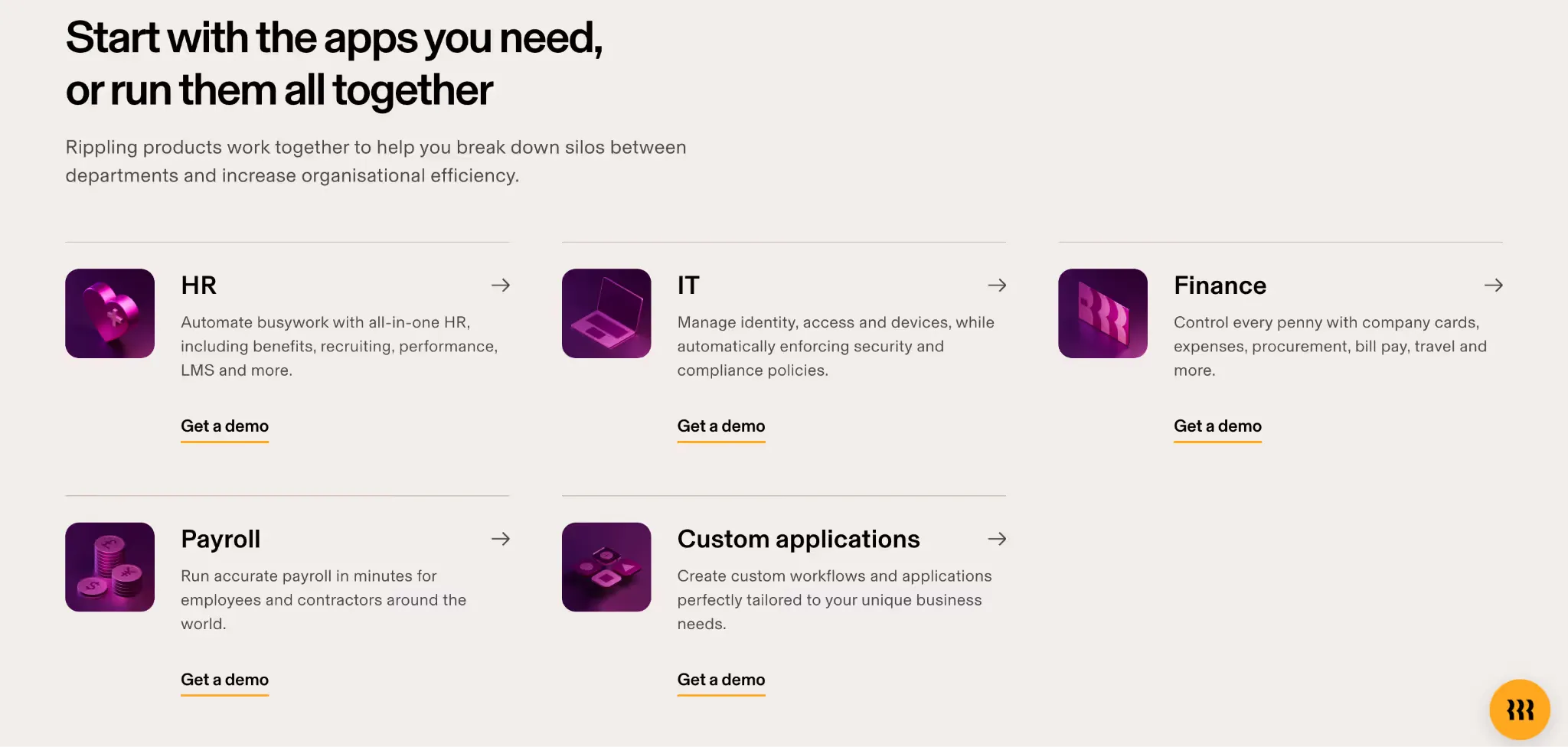
By default, Rippling is a workforce management platform covering HR, payroll, IT, and finance. It is not a PEO until a company actively enrolls in its PEO layer.
When you do opt in, Rippling becomes your co-employer. That means it takes on legal responsibility for payroll, taxes, benefits administration, and compliance, while you keep control of your business and your people day-to-day.
Rippling is not a certified PEO (CPEO) as recognized by the IRS. For most startups, this distinction is minor in practice, but worth knowing if your board or legal team asks.
.webp)
How Rippling's PEO Service Works
The PEO layer sits on top of Rippling’s core platform and handles the operational work most startup founders don’t have time for. For founders without an HR team, it reduces manual work and keeps compliance on track.
Here’s what Rippling’s PEO includes:
- Group Benefits Access
Rippling PEO pools your employees with its broader client base to access group health insurance rates that a small company typically couldn't access independently.
Medical, dental, vision, life insurance, and FSA/HSA plans are available through Rippling's carrier relationships. Employees enroll online through the Rippling platform, and benefit changes sync automatically with payroll deductions.
Rippling also connects employees to Rightway's dedicated clinical experts, who can help them navigate their coverage and find cost-effective care.
The key limitation is that Rippling assigns you to its master plan pool. It does not shop the open market to find the best-fit carrier for your specific workforce. If your team is young and healthy (meaning your actual risk profile is low), you may be subsidizing higher-risk companies in the pool without knowing it.
Find out if you’re overpaying for benefits. Start your free assessment today!
- Payroll and Tax Filing
Rippling handles the full payroll stack: federal and state tax filings, direct deposit, W-2 preparation, and multi-state compliance across all states. It keeps payroll and benefits in sync, so any change in coverage flows into the next pay run without extra work.
For distributed teams, it sets up state tax accounts when you hire in a new location, so you don’t have to handle registrations yourself. You can also run payroll with multiple pay rates and job codes, which helps if you’re managing contractors and part-time roles.
- Compliance Support
Employment law changes constantly and varies by state, which creates real administrative burden for companies without a dedicated HR function. Rippling tracks state-specific compliance requirements automatically, which include new hire reporting, ACA filings, state-specific reporting, etc. It also updates them when regulations change.
The PEO arrangement also includes Employment Practices Liability Insurance (EPLI) and workers' compensation coverage. If an employment-related claim arises, you don’t need to secure separate insurance.
- HR Expert Guidance
Rippling's PHR- and SHRM-certified HR professionals are available on-demand for guidance on complex HR situations, like terminations, leave disputes, harassment policies, and more. This is useful for companies that don't have a dedicated HR hire yet and need occasional expert advice without paying for a full-time role.
Rippling also uses its Mineral integration to help teams build and maintain employee handbooks, with automated alerts when employment laws change.
- All-in-One Platform
With most PEOs, the benefits and compliance layer sits separately from the HR software. This means data has to be manually reconciled between systems. With Rippling, the PEO is built into the same platform you use for payroll, IT, HR, and finance.
When a new hire completes onboarding, their benefits enrollment, payroll setup, and software access are all updated in the same platform - no duplicate entry across separate tools.
How much does Rippling PEO Cost
Rippling does not publish its PEO’s pricing publicly. You need to schedule a live demo to get a personalized quote, though reviewing a breakdown of Rippling pricing can give you a clearer picture of their base platform and module costs.
Where Rippling Shines
- Automated multi-state compliance: As you hire across states, Rippling registers tax accounts and tracks state-specific requirements without you having to manage it yourself.
- HR and benefits savings: Rippling claims that its qualified PEO customers save an average of 20% on annual medical, dental, and vision benefits costs.
- PEO exit flexibility: Unlike traditional PEOs, Rippling lets you move off the co-employment layer without replacing your underlying software (HR, payroll, IT, and finance).
Where Rippling Falls Short
- No benefits cost transparency: At renewal, Rippling presents plan options from its carrier pool without running a full market audit or sharing the risk score carriers use to price your workforce. That score, built from your team's age, gender, location, and claims history, directly determines your premium.
For a founder, that means you're accepting whatever rate Rippling gives with no data to push back on and no way of knowing if a better deal exists elsewhere. - Complex onboarding and setup: Getting up and running on Rippling PEO is not a quick process. Onboarding is typically handled through a handful of calls followed by email exchanges, with limited access to live support during the transition period. For founders switching from another PEO, this can mean continuous back-and-forth and slower response times when speed matters most.
Rippling Customer Reviews
Carly S. shares their experience, “Rippling is a no-nonsense, progressive PEO service that’s clearly built for the 21st century. Forward-thinking, seamless, and seriously impressive.”
Another review from Marshall R., “I think an area that could be improved is the implementation process itself. A lot of companies are moving to a help-based structure and that’s fine, but it takes away from the customized design of a really malleable system at an early stage for a new client.”
Who Rippling Is Best For
- Startups with less than 10 employees that want payroll, HR, benefits, and IT managed in one platform and are comfortable with the co-employment model.
- Founders who want to fully outsource HR and benefits administration to a third party so they can focus on growing the business.
Rippling PEO vs. Traditional Pure-Play PEOs
Rippling is often compared to traditional pure-play PEOs, but they’re not the same.
The entire business of a pure-play PEO is built around the co-employment model. Rippling embeds the PEO layer within a broader platform that also handles HR, payroll, IT, and finance. Even if you move off the PEO, the underlying system remains, which is not the case with most traditional PEOs.
Here's how they stack up on the dimensions that matter most to a founder.
For benefits management, neither Rippling nor pure-play PEOs run a full market audit at renewal nor share your workforce's risk score. Both are also not structurally incentivized to lower your premium. Their commission goes up when your benefits spend goes up.
This isn’t a criticism of any one provider, it’s a reality of how PEO pricing works. As a result, companies with low-risk workforces can end up overpaying year after year without clear visibility into why.
If benefits make up a big part of your costs, it’s worth looking at options beyond a PEO.
Alternative to Rippling PEO: Ignition Benefits
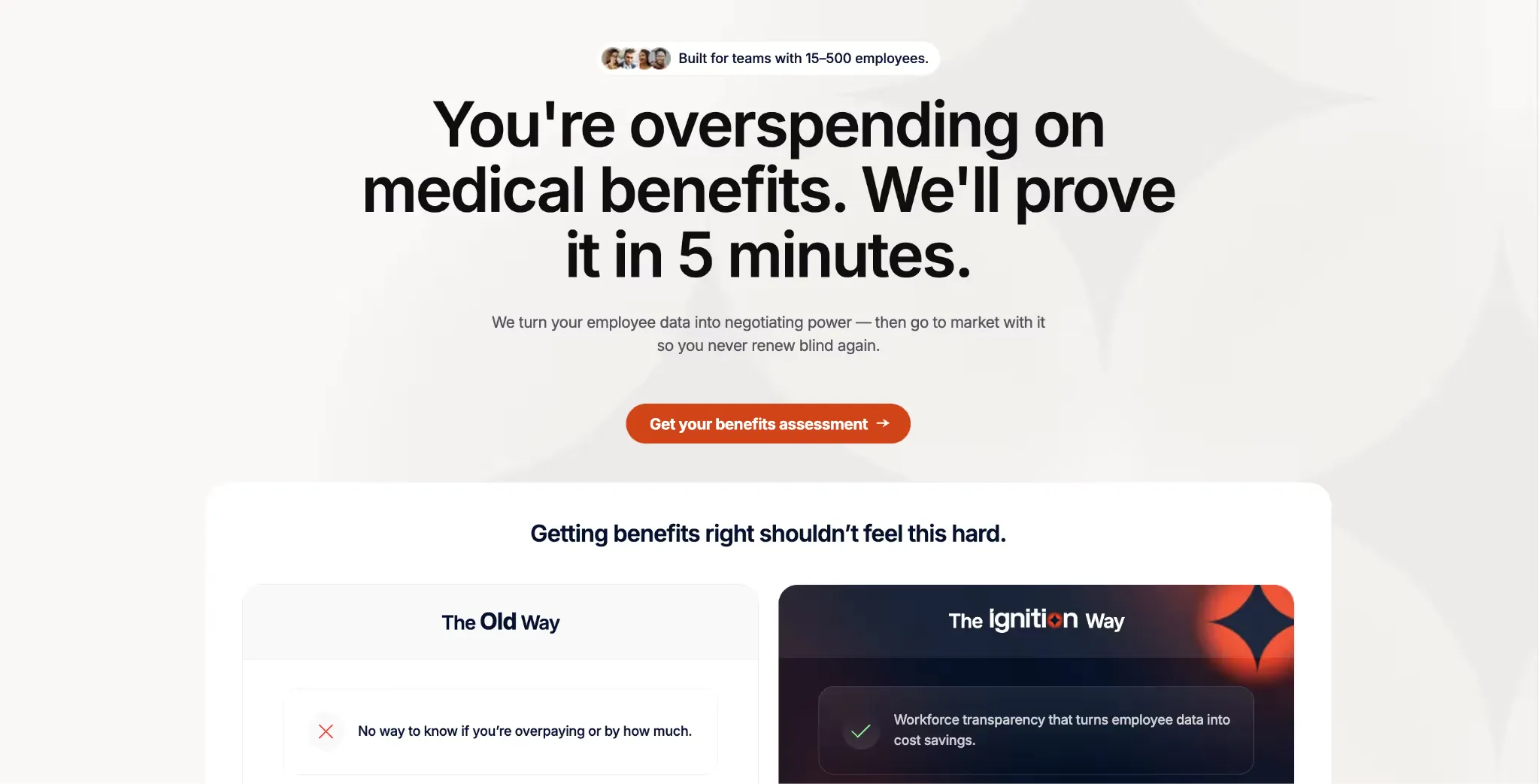
If your goal is to get the best health coverage at the lowest cost for your team, Rippling PEO may not be the best fit. It’s built as an operations platform with benefits added on, rather than a benefits-first system focused on consistently driving down premiums and giving full transparency into how carrier pricing is set.
This is where Ignition Benefits comes in. It is an independent employee benefits brokerage built for startups and high-growth companies with 10-500 employees. Igniton’s job is finding the right coverage at a price that actually reflects your team's risk profile.
It doesn't bundle payroll or HR - and it doesn't need to. It pairs cleanly with platforms like Rippling for the operational layer while handling the one part of the PEO relationship Rippling and other PEOs don’t: run an audit of what your benefits should actually cost and use that data to go to market on your behalf.
Switching from Rippling's benefits to Ignition does not require leaving Rippling. A single Broker of Record letter appoints Ignition as your benefits agent.
Ignition Benefits Key Features
Benefits Risk Assessment
Every insurance carrier calculates a risk score for your workforce, built from your team's age, gender, and location. That score is what drives your premium. Most founders on PEOs have never seen it.
Ignition shares that score with you before going to market, then runs a competitive bid across every available carrier and plan - not just the two or three options in a PEO's preferred pool.
For a young, healthy startup team, the risk score is typically low, meaning your actual carrier risk is minimal. When premiums are high and the risk score is low, you're overpaying. Ignition uses that gap to get a better deal.
Benefits Analysis Report
Ignition delivers a full Benefits Analysis Report in 14-21 days compared to the 8-12 weeks a traditional broker takes to produce the same review. The report shows how your current plan compares to every option on the market, lays out your workforce risk profile, and gives a clear next step.
It’s built for founders, written in plain language, and focused on helping you make a decision with confidence.
The process is simple: a 15-minute intake call to share workforce data, followed by a 15-minute review of the proposal. Ignition handles everything in between.
Full Fee Transparency
Ignition earns through standard carrier commissions, with no cost to the employer. This is the same model as every other broker, including those part of Rippling. The difference is disclosure. Ignition shares its full commission structure from day one. .
This is a legal right under the Consolidated Appropriations Act of 2021 that most founders have never been told they have.
Find out if you’re overpaying for employee benefits. Get your free benefits assessment now →
Stop Paying PEO Rates for a Healthy Team - See What You're Actually Overpaying
Rippling is a strong platform if you need payroll, HR, and IT management in one system. But its PEO layer is built for convenience, not cost optimization.
Given how large a share benefits take on your P&L, cost control and transparency matter. Rippling and most PEOs don’t share your team’s risk score, don’t run a full market audit, and don’t disclose what they earn from carriers.
Ignition Benefits gives you that visibility, so you can identify cost gaps and speak with confidence about benefits in board discussions.
FAQs
What is Rippling?
Rippling is a workforce management platform that unifies HR, payroll, IT, and finance in a single system. Companies can use Rippling as a standalone HR/payroll platform or opt into its PEO layer for co-employment, benefits access, and compliance support.
Is Rippling a Certified PEO?
No. Rippling is not a Certified PEO (CPEO) as designated by the IRS.
When Does It Make Sense to Leave Rippling's PEO?
Three moments signal it’s time for a review: a renewal increase with no clear explanation (10–20% is common but not something you have to accept), approaching 50 employees (where PEO pool pricing can start working against healthy teams), and any board conversation about rising benefits cost. At any of these points, an independent benefits broker like Ignition Benefits can benchmark your current costs against the full market in under three weeks.



_%20Which%20One%20Wins%20for%20Your%20Team_.webp)

![How to Reduce Small Business Health Insurance Costs [2026]](https://cdn.prod.website-files.com/69f22330e53a32bb7629af15/6aa04b2f5dbdf3dc6b28b351_How%20to%20Reduce%20Small%20Business%20Health%20Insurance%20Costs%20%5B2026%5D%20(1).webp)
.webp)




.webp)



.webp)

.webp)









.webp)





.webp)







.webp)




.png)

